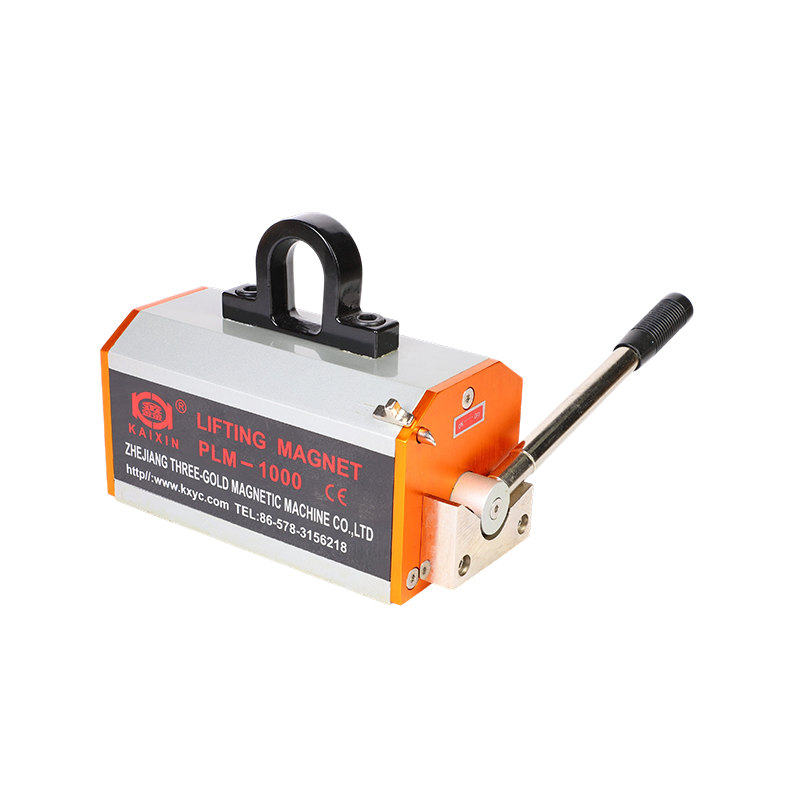
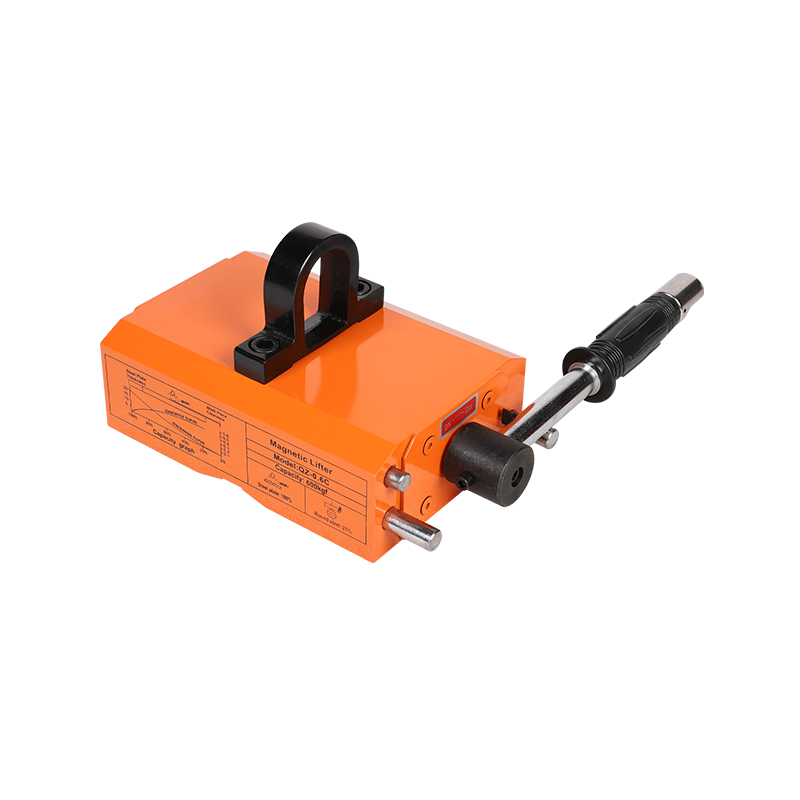
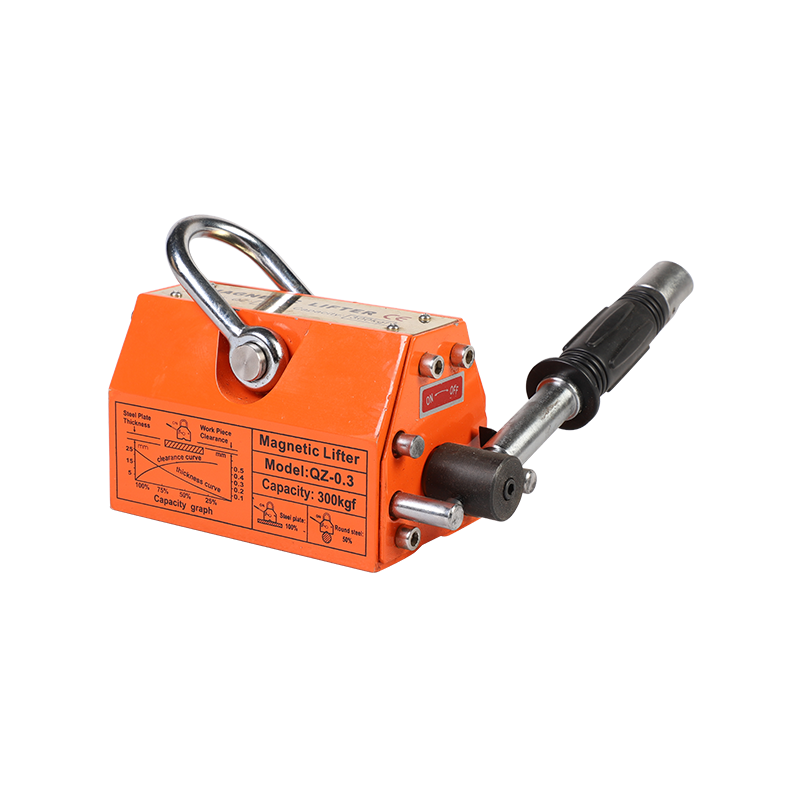
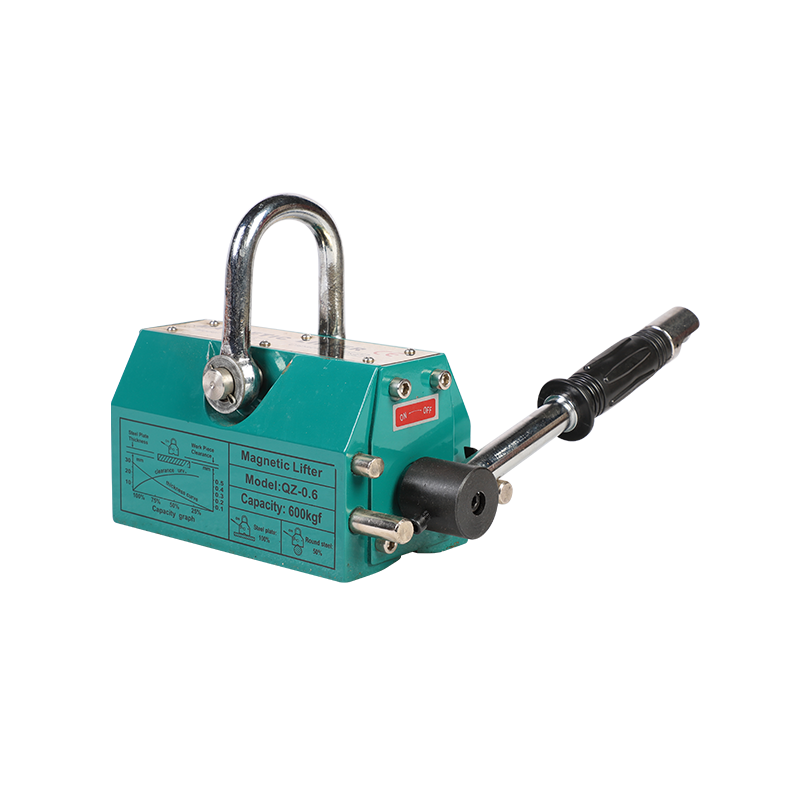
A Permanent Magnetic Lifter is engineered to generate strong magnetic attraction when in full contact with flat, clean steel surfaces. However, when handling irregular or round steel workpieces, the magnetic force may decrease due to reduced surface contact.
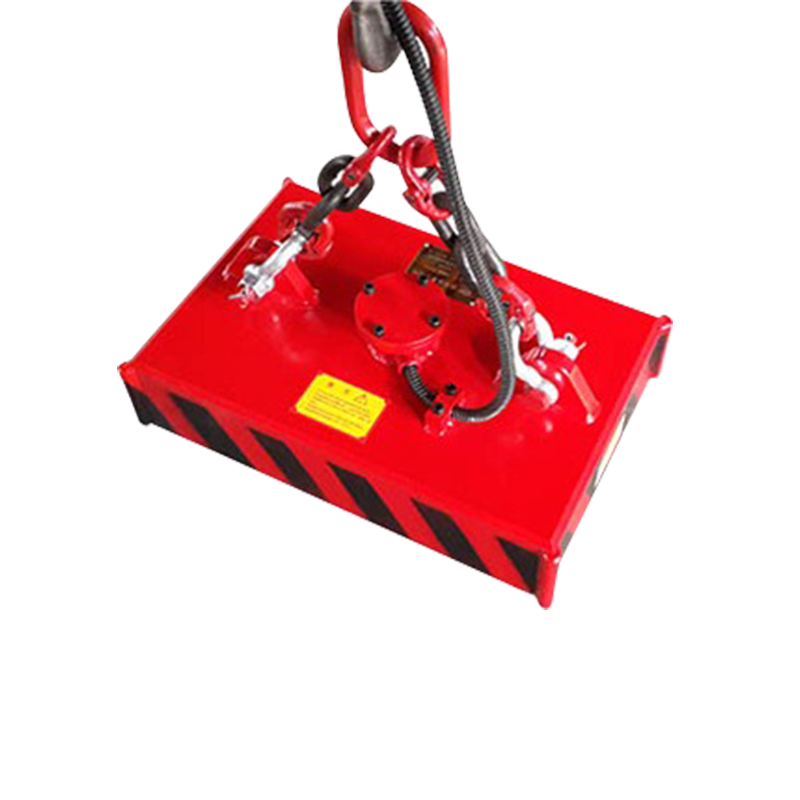
• Round or cylindrical steel creates fewer direct contact points with the lifting surface, which limits the magnetic flux penetrating the material. As a result, the effective holding force may drop compared to lifting flat plates.
• Irregular steel, such as castings, bars with uneven surfaces, or components with grooves, further disrupts the magnetic path, diminishing lifting strength.
• The curvature radius of a cylindrical object also plays a role: the smaller the radius, the more significant the reduction in holding area and stability.
Although the lifter remains functional, operators must understand that rated lifting capacity is usually based on flat surfaces, and adjustments must be made when working with non-flat steel shapes.
Magnetic attraction relies heavily on the continuity and smoothness of the surface being lifted.
• Gaps between the magnet face and the steel surface allow air pockets, which weaken the magnetic connection and reduce holding efficiency.
• Rust, paint, mill scale, oil, or machining marks can further obstruct magnetic penetration, compounding the reduction caused by curved geometry.
• Even minor imperfections or dents on a round bar may cause an uneven load distribution, increasing the risk of slippage under heavy lifting conditions.
Maintaining the possible surface condition helps improve available magnetic strength, especially when working with shapes that inherently provide less contact.
Despite reduced attraction, cylindrical steel can still be lifted safely when proper guidelines are followed.
• Most magnetic lifters include specific load ratings for round materials, typically 30%–50% lower than for flat plates. Operators should verify these ratings before use.
• The steel must be thick enough for magnetic saturation; thin-walled tubing or hollow cylinders offer significantly less holding capability.
• Proper centering of the magnet on the cylinder is essential to maintain balance and prevent rotation. Misalignment can cause the load to twist, potentially dislodging it from the magnetic grip.
When these rules are applied, magnetic lifting remains a safe option for round materials despite inherent limitations.
Beyond geometry, the physical properties of the steel itself affect lifting performance.
• Low-carbon steels and structural steels respond well to magnetic lifting, even when cylindrical.
• High-carbon steels, stainless steels, or alloy steels often have weaker magnetic permeability, resulting in further reductions in force.
• Hot steel or recently machined steel may also exhibit weaker magnetic attraction because elevated temperatures and residual stress disrupt magnetic flow.
Evaluating both shape and material is critical in predicting real-world lifting capability.
Manufacturers have developed features to improve lifting performance on non-flat shapes.
• Some magnetic lifters use V-shaped grooves or machined channels to increase stability on round bars. The V-block improves contact, reducing the chance of slipping during lifting.
• Adjustable magnetic shoes or modular lifting faces help operators tailor the contact interface to various steel geometries.
• Advanced magnetic circuits ensure deeper penetration into steel, partially compensating for reduced contact area.
These improvements allow the same lifting device to function safely across diverse workpiece shapes.
Handling round or irregular steel with a magnetic lifting device is entirely feasible, provided operators recognize the natural reduction in magnetic strength caused by limited contact surfaces. Proper safety checks, correct load rating usage, and thoughtful lifting techniques ensure stable operation. With good maintenance and attention to steel geometry, magnetic lifting remains efficient and dependable across a wide range of industrial applications.



PRODUCTS

CONTACT US
Copyright @Zhejiang Three-gold Magnetic Machine Co., Ltd. All rights reserved
Magnetic Lifting Tools Manufacturers


 English
 中文简体
中文简体
 русский
 عربى
عربى