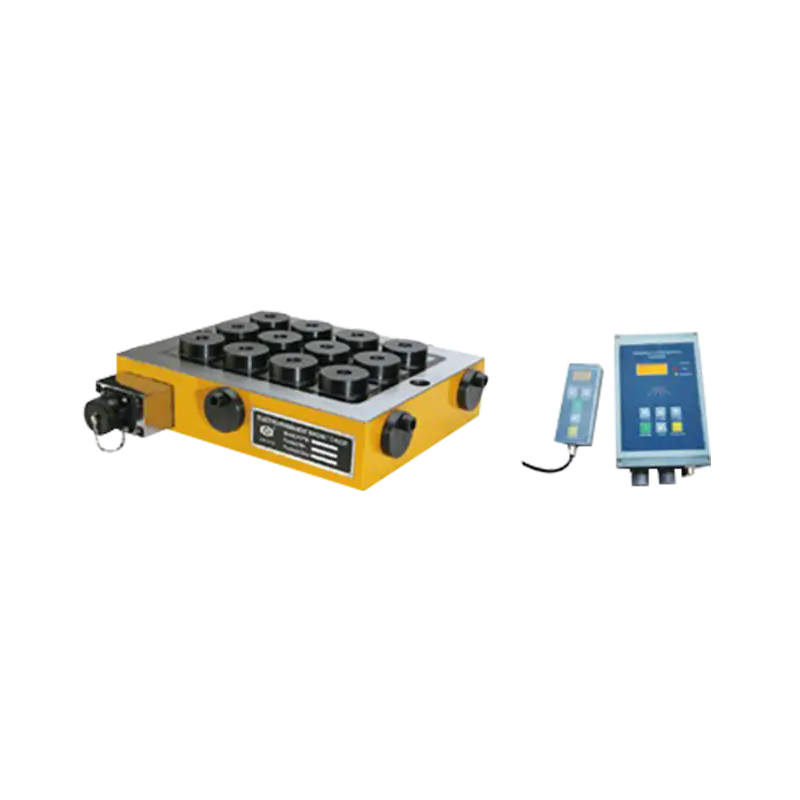
Your chuck's holding force isn't what it used to be. You notice this when parts start shifting during cutting—just slight movement at first, maybe a couple thousandths. But then surface finish suffers. Dimensions drift. Things that shouldn't vary start varying. The Electro Permanent Magnetic Chuck has been running for years without much trouble but something's changed. You start wondering if it's time to replace it. Here's what you need to know before you make that decision: most of the problems that feel like equipment failure are actually just accumulated contamination. The electromagnetic system itself usually still works. What's happened is that the interface between chuck and workpiece got compromised. Understand this and you'll see that proper maintenance keeps these systems running reliably far longer than you'd think.
Inside the chuck, permanent magnets create baseline magnetic force. Electrical circuits amplify or reduce this field depending on what you're doing. When you set a part on the chuck, the magnetic attraction pulls it down and holds it. Straightforward concept. But here's where understanding breaks down for most people: the force doesn't act directly on the part. It travels through whatever sits between the chuck and the workpiece. Clean metal-to-metal contact? Force transfers directly. You get full holding strength. Now imagine a thin film of coolant on that same surface. Add a layer of microscopic metal particles. Add dust. The magnetic force has to travel through all these barriers before reaching your workpiece. Each layer reduces effective holding power.
Think of it like pressing your hand against glass. Direct contact means immediate force transfer. Now slide a plastic bag between your hand and the glass. Immediate difference. Add oil under the plastic. The effect compounds. Your hand still has the same pushing force but the actual contact is compromised. That's exactly what happens to your chuck. The magnet still works. The problem is the contamination barrier.
Most modern cutting fluids are designed to improve machining. They reduce friction between tool and part. They dissipate heat. They carry chips away. For the part being machined, this is good. For the chuck holding that part, it creates problems. Coolant splashes everywhere—that's just what happens in any machining operation. Some of it reaches the chuck surface. Different coolant types create different headaches. Oil-based formulations leave sticky residue acting like an insulating film. Water-based coolants evaporate but leave mineral deposits behind. Semi-synthetic formulations do both.
The thing about coolant accumulation is that it builds gradually. You don't notice it happening. Holding force declines incrementally over weeks and months. After a couple weeks of continuous production maybe you're down five percent. A month in and you might be down ten or fifteen percent. Workers might not even mention it because they don't really notice either. The CNC machine compensates initially. Everything seems fine. Then precision problems start showing up. By that point your chuck surface is already significantly fouled.
Some shops try to minimize this by redirecting coolant flow away from the chuck. Flood systems spray everywhere though—there's only so much you can do with shop design. Chip collection helps but doesn't solve the problem completely. The reality is that some coolant will always reach the magnetic surface regardless of what precautions you take.
Every machining operation produces chips. Small particles are particularly problematic because they cling to the magnetic surface. That might sound obvious—they're attracted to the magnet—but the practical implications aren't always clear. These particles don't just sit on the surface. They work their way into grooves and irregularities. Over time you develop a layer of embedded metal particles. This layer creates mechanical separation between chuck and part. The magnetic force has to travel through this layer instead of directly contacting the workpiece. That reduces effective holding.
What's tricky is that the accumulation happens gradually and invisibly. You could look at your chuck and think it's relatively clean even when it's significantly contaminated. The particles embed themselves into surface irregularities where you can't easily see them. You'd need magnification to understand the extent of the problem. But your machine understands it immediately. Holding force declines. Dimensional variation increases. Tool chatter develops because positioning isn't as stable as it should be.
Dust from grinding operations, material handling, general shop environment—all of it gravitates toward a magnetic chuck. The electrical activity around running equipment creates charged particles in the air. These particles naturally migrate toward the chuck. You could clean every single day and still find new contamination accumulating.
Machining generates heat. The cutting tool heats up. The workpiece heats up. Coolant running through the system heats up. This heat radiates into the chuck holding the part. Additionally the electromagnetic circuits themselves generate heat when operating. Permanent magnets have properties that change with temperature. This isn't dramatic but it's measurable. Higher temperatures reduce magnetic strength. When the chuck cools down the strength returns. But repeated thermal cycling over months and years creates cumulative stress.
Temperature changes also cause expansion and contraction in different materials at different rates. The chuck body expands at one rate. The magnetic components expand at another. Electrical components at yet another. These mismatches create mechanical stress internally. Nothing breaks catastrophically but stress accumulates. Over years of operation you get subtle degradation of component fit and alignment.
Shops with poor environmental control experience worse thermal stress than climate-controlled facilities. If your shop has significant temperature swings between shifts or seasons you're probably accelerating these problems. Some shops run twenty-four hours with no temperature control. Others operate standard hours in climate-controlled environments. The difference in thermal cycling is substantial.
The electromagnet relies on electrical circuits. If those circuits degrade, holding force degrades even if the magnet itself remains perfectly fine. Corroded electrical connections increase resistance. Higher resistance reduces current flow. Less current means weaker field enhancement. The permanent magnet still works but the overall system doesn't function at specification. This is a common problem that people don't think about.
Power supply stability affects electromagnetic performance. Voltage fluctuations influence current delivery. Some facility electrical systems are aging. Power quality gradually degrades over decades. The power feeding your control systems might not be as clean as it should be. Dirty power from aging infrastructure impacts performance. Control circuit components have finite lifespan too. Capacitors dry out. Relays wear. Wire insulation becomes brittle. None of this fails dramatically but performance degrades imperceptibly.
A shop experiencing intermittent or strange problems with chuck performance might actually have electrical degradation rather than mechanical issues. This is why electrical verification matters in your maintenance routine. You're not just checking mechanics.
Daily before production starts, spend a few minutes looking at the chuck surface. Look for visible contamination. If it's safe, feel the surface. Visual inspection catches obvious problems early. That's five minutes you save later. Weekly you should actually clean the chuck. Not just wipe it down but genuinely clean it. Weekly electrical verification means checking that the system engages and disengages properly and that control response feels normal. Nothing fancy. Monthly you measure actual holding force if you have the equipment. This reveals trends. Quarterly you do detailed inspection looking for corrosion, mechanical wear, electrical issues.
This sounds like a lot but it actually totals less than an hour weekly. Compare that against one production delay caused by chuck problems. The economic case becomes obvious immediately. A failed chuck during production isn't a minor inconvenience. It stops everything. Customers complain. Expedited repairs cost money. Parts might need rework.
| Maintenance Task | Frequency | Time Investment | What It Reveals |
|---|---|---|---|
| Visual inspection | Daily | 5 minutes | Visible contamination, damage, surface condition |
| Cleaning | Weekly | 30 minutes | Coolant and chip buildup, surface accessibility |
| Electrical check | Monthly | 10 minutes | System responsiveness, engagement consistency |
| Force measurement | Quarterly | 15 minutes | Performance trends, degradation rate |
| Detailed inspection | Quarterly | 30 minutes | Corrosion, mechanical wear, electrical condition |
Oil-based coolant needs aggressive degreasing. Water-based coolant needs different approach since minerals require different solvents. Some formulations are hybrids requiring combination treatment. You need to know what you're using. Check your coolant specification or ask the supplier what cleans it. Using the wrong cleaning agent might spread contamination rather than remove it. That's actually worse than not cleaning.
Some shops keep multiple cleaning agents available. Mineral spirits work for oil-based residue. Water-based cleaners work for water-soluble deposits. Specialized industrial degreasers handle heavy accumulation. Having appropriate tools prevents ineffective cleaning. Metal chips require different approach than coolant. You need tools that remove chips without scratching the chuck surface. Brass or soft metal scrapers work better than hard steel. Plastic scrapers sometimes work too. Avoid anything that damages the surface because damaged areas create more places for contamination.
Environmental factors change what maintenance you actually need. Humid shops see faster corrosion. Dusty shops see faster chip and dust accumulation. Temperature swings magnify thermal stress. You can't fix facility environment but understanding how it affects your chuck helps you plan appropriate maintenance frequencies.
Sometimes degradation happens gradually over years and people forget what normal performance felt like. Newer operators don't know what stable holding should feel like. This is actually dangerous because problems continue unchecked. If you have experienced operators who remember earlier performance, listen to them. They notice changes that metrics don't immediately reveal.
Workpiece movement during cutting is the most obvious indicator. Parts shouldn't shift when cutting forces are applied. Surface finish degradation indicates something wrong with positioning stability. If surface finish was good last week but now it's poor, something changed. Repeated dimensional variation across multiple parts suggests chuck isn't maintaining consistent workpiece location. These aren't dramatic failures but they affect product quality.
Control system behavior sometimes reveals problems. Slow engagement. Disengagement taking longer than usual. Inconsistent response to commands. These suggest electrical issues rather than mechanical problems. If you notice these things, electrical system investigation becomes priority rather than continuing to ignore it.
High-volume production running continuously needs different maintenance than low-volume batch production. Continuous operation means constant coolant exposure. Maintenance intervals compress. What works quarterly for occasional production might need weekly attention for continuous operation. You have to adjust based on reality. There's no universal answer.
Equipment running in harsh environments needs different care. Coastal facilities deal with salt air accelerating corrosion. Hot shops have different thermal challenges than cold shops. Humid environments create different problems than dry ones. Your facility environment influences everything. You can't change facility conditions but understanding them helps you plan maintenance appropriately.
Documenting what you find during maintenance reveals patterns. If you're cleaning chips weekly and they're still accumulating beyond what you'd expect, maybe your chip collection system needs attention. If corrosion develops quickly, your facility environment needs consideration. Data guides better decisions than guessing. Without documentation you're just hoping maintenance is adequate.
Preventive maintenance costs time and supplies. Reactive maintenance costs emergency service calls. Costs production downtime. Costs tool replacement. Costs customer unhappiness. The economic calculation should obviously favor prevention. A weekly cleaning taking thirty minutes costs far less than one production delay. Quarterly electrical checks prevent failures causing shutdown.
Most shops discover this truth through experience. They skip maintenance to save labor cost initially. Problems develop. Production stops. Customers complain about delays. Emergency technician visit costs triple normal service. The financial pain makes prevention case obvious. Hopefully you learn this through somebody else's experience rather than discovering it yourself through expensive consequences.
Equipment holding parts during precision machining demands maintenance. Neglect creates false economy. Invest in systematic care and equipment performs reliably. Neglect it and you'll face expensive consequences. This isn't complicated. It's just consistency.
Some problems exceed routine maintenance capability. Electrical issues require appropriate diagnostic equipment and expertise. Damage to chuck structure needs specialized repair. Component replacement needs done correctly. Attempting complex repairs without proper knowledge risks creating additional problems. This is where calling manufacturer support makes sense.
Manufacturer support provides appropriate expertise. Engineers understand systems thoroughly. They have proper diagnostic tools. They know component replacement. Using their services prevents costly mistakes. Consider their services as insurance against major problems. The cost of professional help typically costs far less than consequences of wrong repairs made with limited knowledge.
Electro Permanent Magnetic Chuck systems deliver stable holding force and machining precision when maintained systematically. Understanding how coolant contamination, metal chip accumulation, thermal effects, and electrical degradation combine to reduce holding force enables preventive action before problems affect production quality and part precision. Routine maintenance through daily visual inspection, weekly surface cleaning, monthly electrical verification, and quarterly detailed measurement keeps chuck systems functioning reliably and maintains the precision your manufacturing operations demand. The economic case for maintenance becomes obvious when you calculate the cost of production disruptions, quality issues, and eventual equipment replacement compared against the reasonable time investment required for systematic care and attention. Contamination problems accumulate gradually and require consistent attention to prevent progression. Many holding force problems trace back to inadequate surface maintenance rather than actual equipment failure. Zhejiang Three-gold Magnetic Machine Co., Ltd. brings deep expertise in magnetic chuck systems and their maintenance requirements, offering guidance for developing maintenance strategies suited to your specific manufacturing operations, production intensity, facility environment, and equipment conditions. Contact them to discuss your maintenance practices, identify opportunities for improving chuck performance, and determine what service or technical support might benefit your operation and help extend equipment lifespan.



PRODUCTS

CONTACT US
Copyright @Zhejiang Three-gold Magnetic Machine Co., Ltd. All rights reserved
Magnetic Lifting Tools Manufacturers


 English
 中文简体
中文简体
 русский
 عربى
عربى