A part that shifts slightly mid-cut, ruining a batch nobody noticed until inspection. A fixture that takes ten minutes to set up correctly, only for the workpiece to still creep under cutting pressure. If you've been chasing down inconsistent results on parts that should be straightforward, an Electro Permanent Magnetic Chuck is often the fix engineers eventually land on, once they've exhausted every adjustment a traditional mechanical fixture allows. Weak clamping force rarely shows up as a dramatic, obvious failure. It creeps in quietly, a slightly out-of-tolerance batch here, an unexplained chatter mark there, until enough small problems accumulate that someone finally asks whether the fixture itself is the actual culprit rather than the machine or the tooling.
Mechanical fixtures rely on physical contact points, bolts, clamps, vises, to hold a workpiece steady during machining. That approach has worked reliably for a long time, but it comes with inherent limitations that become more apparent as tolerances tighten and cutting speeds increase.
Because mechanical clamps apply pressure at specific points rather than across an entire surface, workpieces often experience localized stress rather than even support. Thin or irregularly shaped parts are particularly vulnerable here, sometimes deforming slightly under clamp pressure in ways that only become visible once the part is released and springs back.
Adjusting mechanical clamps correctly takes time, and the quality of that setup often depends heavily on operator experience and attention to detail. A rushed or inconsistent setup introduces variability from job to job, even when the same fixture and part are involved.
Physical clamps occupy space on or around the workpiece, sometimes blocking tool access to areas that need machining. This forces awkward workarounds, repositioning the part mid-job, or accepting reduced machining coverage in a single setup, both of which add time and introduce additional room for error.
Understanding the downstream consequences helps clarify why this issue deserves more attention than it often gets.
None of these problems necessarily point to a machine or tooling issue on their own, which is exactly why fixture-related clamping weakness sometimes goes undiagnosed for longer than it should.
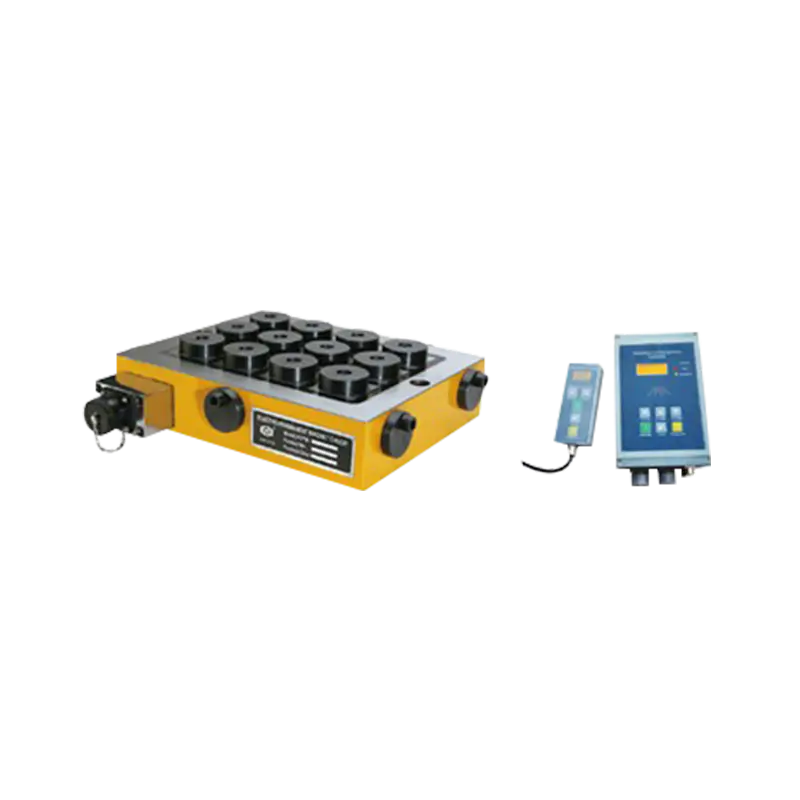
Rather than relying on mechanical contact points to generate clamping force, this technology uses magnetic flux to hold ferrous workpieces securely across their contact surface. The chuck can be magnetized or demagnetized through a brief electrical pulse, after which it holds its magnetic state without continuous power draw, engaging or releasing the workpiece as needed.
This design fundamentally changes how clamping force gets applied. Instead of concentrated pressure at a handful of points, the magnetic field distributes holding force evenly across the entire contact area, which addresses several of the core limitations traditional mechanical fixtures struggle with.
| Factor | Traditional Mechanical Fixture | Electro Permanent Magnetic Chuck |
|---|---|---|
| Force Distribution | Concentrated at contact points | Even across full ferrous contact surface |
| Setup Time | Often lengthy, operator-dependent | Faster, consistent engagement across cycles |
| Workpiece Access | Clamps may block tool paths | Minimal obstruction, more surface exposed |
| Suitability for Thin Parts | Higher risk of localized deformation | Reduced risk due to distributed holding force |
| Power Requirement During Operation | Not applicable | None needed once magnetized, only for switching |
Reviewing this comparison side by side makes clear why so many CNC shops dealing with persistent clamping inconsistency eventually look toward magnetic solutions rather than continuing to fine-tune mechanical setups that were never really designed for the precision demands they're being asked to meet.
Not every machining application benefits equally from switching away from mechanical clamping, so it helps to understand where the advantages show up most clearly.
Applications outside these categories, particularly one-off jobs on non-ferrous materials, may still favor mechanical fixturing, since magnetic workholding fundamentally depends on the workpiece material being ferrous in the first place.
This is worth addressing directly, since automated and unattended machining operations increasingly demand workholding solutions that don't rely on manual adjustment between cycles.
Because an Electro Permanent Magnetic Chuck engages and releases through a controlled electrical pulse rather than manual clamp tightening, it integrates considerably more smoothly into automated production lines. This reduces the operator intervention required between parts, supporting more consistent unattended or lightly attended operation, something traditional mechanical fixtures generally can't match without substantial custom engineering.
Moving away from established mechanical fixturing toward magnetic workholding isn't a decision to rush into without considering a few practical factors first.
Working through these questions honestly, rather than assuming magnetic workholding solves every clamping challenge universally, helps identify whether this switch genuinely addresses the specific problems a shop has been experiencing.
For manufacturers considering this upgrade, sourcing decisions extend beyond just picking a chuck size off a catalog page.
Raising these points directly with an experienced manufacturer tends to produce a far better outcome than choosing based on price alone, particularly since mismatched chuck specifications can introduce their own inconsistency issues if not properly matched to the application.
Weak clamping force in traditional mechanical fixtures rarely announces itself clearly, showing up instead as scattered quality issues that get attributed to machines, tooling, or operator error long before anyone questions the fixture itself. Recognizing the underlying pattern, uneven force distribution, lengthy and inconsistent setup, restricted tool access, opens the door to considering alternatives built specifically to address these limitations. For ferrous workpieces, particularly thin or complex parts requiring broad surface access during machining, magnetic workholding offers a genuinely different approach to clamping that distributes force evenly and supports faster, more consistent setup across production runs. Whether the goal is reducing scrap tied to workpiece movement, improving compatibility with automated production, or simply eliminating the inconsistency that comes from manual clamp adjustment, evaluating this switch carefully against actual production needs tends to produce a more reliable long-term outcome than continuing to fine-tune a fixturing approach that was never built for the precision demands being placed on it. Zhejiang Three-gold Magnetic Machine Co., Ltd. works with CNC operations, machine tool manufacturers, and metal processing facilities to match magnetic workholding solutions to specific production and material requirements, and welcomes inquiries about chuck specifications, customization, and integration for particular machining applications.



PRODUCTS

CONTACT US
Copyright @Zhejiang Three-gold Magnetic Machine Co., Ltd. All rights reserved
Magnetic Lifting Tools Manufacturers


 English
 中文简体
中文简体
 русский
 عربى
عربى