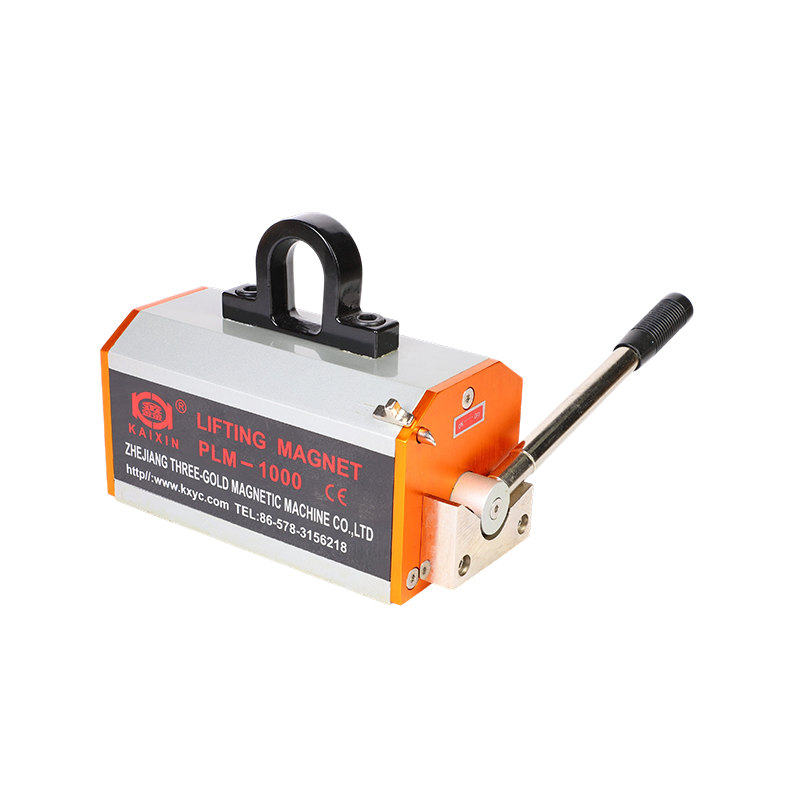
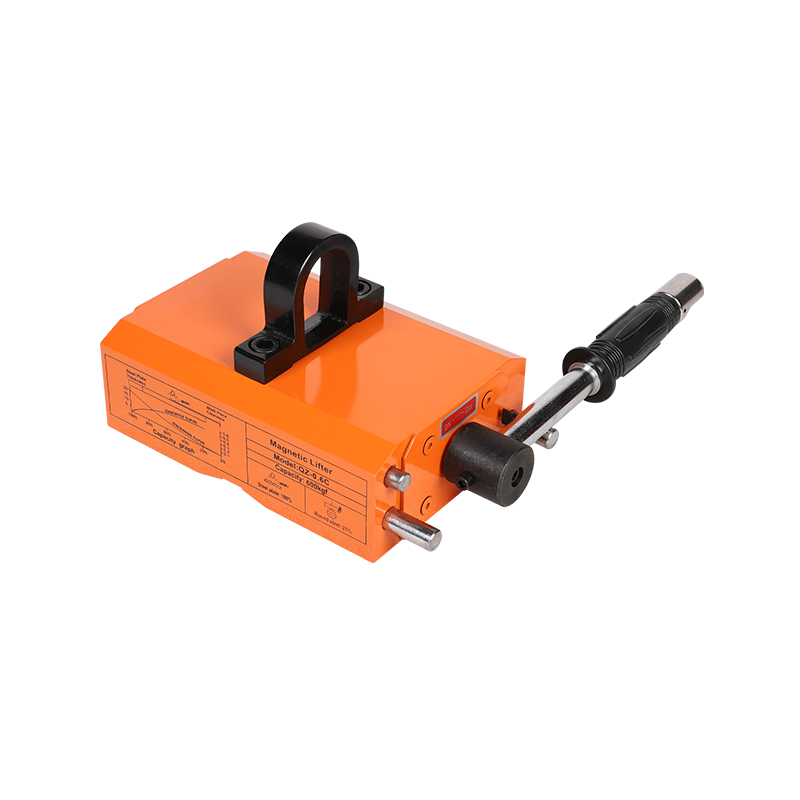
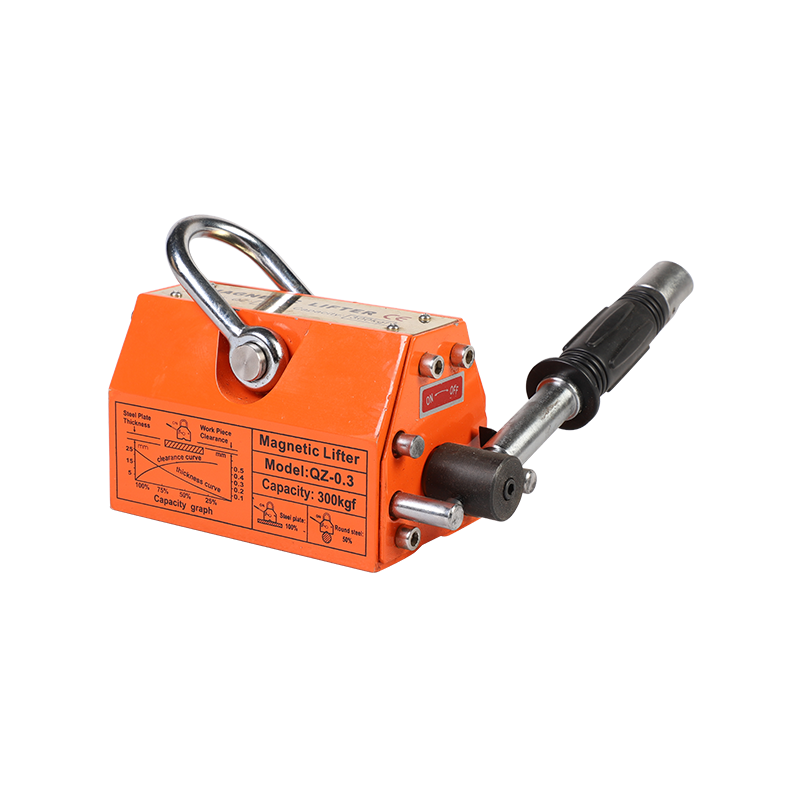
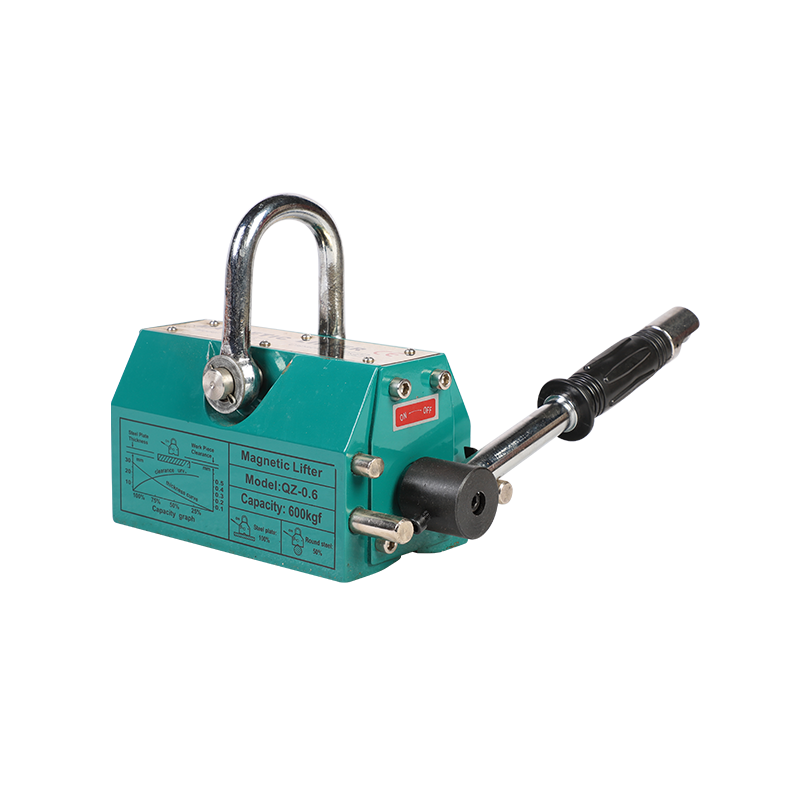
Mechanical clamping has been a standard workholding method in machining for a long time — and it has also been a consistent source of operator injury, setup delays, and workpiece damage. The wrench slips. The clamp shifts under cutting force. The vice obstructs a tool path that would otherwise be clean. These are not occasional problems; they are built into the method itself. For factories evaluating how to reduce workshop injury risk while improving machining throughput, the Electro Permanent Magnetic Chuck represents a genuine operational shift — not just a product swap, but a fundamentally different approach to how workpieces are held during machining.
Before examining the safety case, it helps to understand what the technology actually does. An electro permanent magnetic chuck holds ferromagnetic workpieces through magnetic force generated by a combination of permanent magnets and an electromagnet circuit. Activating the chuck with a brief electrical pulse aligns the magnetic field to clamp the workpiece. Releasing it requires another pulse to reverse the field.
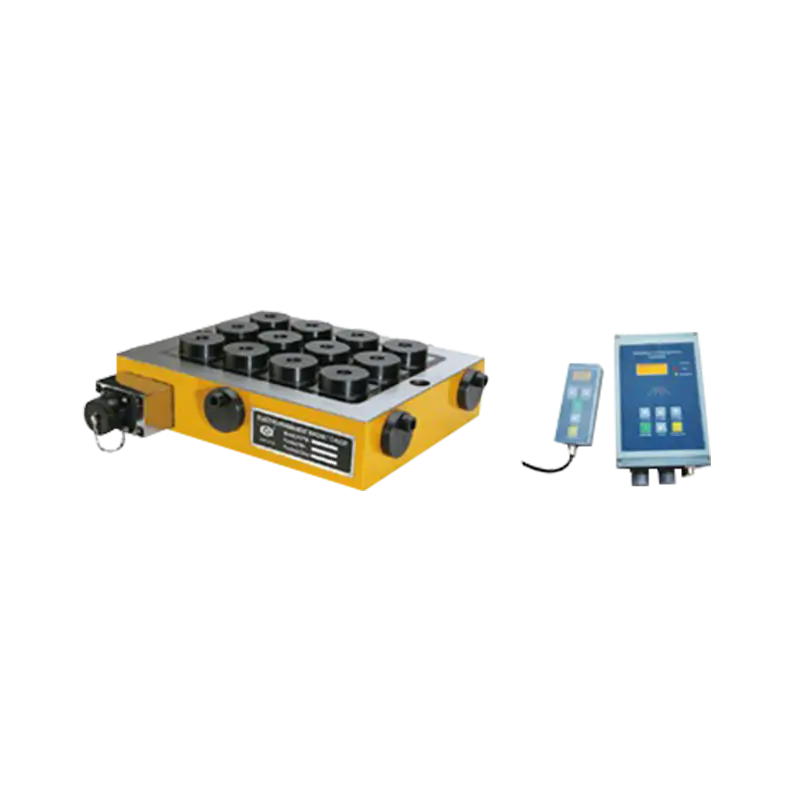
The key characteristic that sets this apart from purely electromagnetic chucks: once activated, no continuous electrical power is needed to maintain the holding force. The permanent magnet component sustains the grip independently.
What this means in practice:
This combination of passive holding and active switching is what makes the system both safe and energy-efficient in industrial machining environments.
The risks associated with mechanical clamping are well understood in manufacturing — yet they persist because alternatives have not always been practical for every application. Looking at the problem honestly reveals several distinct failure modes.
Manual tightening introduces human variability. Two operators tightening the same clamp will apply different force levels. Under-tightening leaves the workpiece prone to shifting during cutting. Over-tightening can deform the part or create stress points that affect machining accuracy.
Localized clamping force creates instability. A mechanical clamp contacts the workpiece at specific points. Under the lateral and vibrational forces of milling or grinding, a workpiece held at isolated points can shift, rotate, or lift — especially as the cutting operation removes material and changes the part's weight distribution.
Setup requires hands close to the cutting zone. Tightening clamps or adjusting a vice brings the operator's hands near the workpiece and tooling. This is where contact injuries, pinch points, and tool proximity hazards concentrate.
Clamps obstruct the machining surface. The physical presence of clamps across the workpiece limits which surfaces and angles can be accessed in a single setup. Repositioning extends cycle time and multiplies the number of times a workpiece is handled — each repositioning being another opportunity for an error.
The safety improvement from switching to magnetic workholding is not subtle. It removes the operator from several of the most hazardous moments in the machining cycle.
Activation is handled by a button or controller, not by physical contact with the workpiece or fixture. The operator positions the part, steps back, and activates the chuck. There is no wrench, no torque applied to clamp bolts, no adjustment under load. The hands-near-hazard window closes dramatically.
Beyond the activation moment:
In high-volume production environments, reducing the number of manual handling steps per cycle compounds significantly across shifts and across a working year. Fewer interventions means fewer exposure events.
This is the question that comes up in almost every evaluation of electromagnetic workholding. The concern is legitimate: if the chuck requires power to hold the workpiece, a power interruption could release the part mid-cut — a serious safety event in any machining context.
The electro permanent magnetic chuck addresses this concern directly through its operating principle. Because the holding force relies on permanent magnets that are physically aligned during the activation pulse — not on continuous current — a power failure does not release the workpiece. The magnetic field remains locked until a deliberate reverse pulse is applied.
This means:
For industries where machining safety compliance is audited, this passive holding characteristic is a meaningful specification advantage over purely electromagnetic alternatives.
Safety and productivity are often treated as competing priorities in manufacturing — but magnetic workholding is one of the cleaner examples of a change that improves both simultaneously.
Setup time drops considerably. Positioning a workpiece on a magnetic chuck and activating it takes a fraction of the time required to position, tighten, and verify mechanical clamps. For operations that run multiple short jobs across a shift, that time reduction per setup adds up across the production schedule.
Surface accessibility changes the machining strategy. With clamps removed from the equation, all five faces of a workpiece can often be machined in a single setup — or at minimum, with fewer repositions. Fewer setups means fewer opportunities for cumulative positioning error, which directly affects finished part accuracy.
Vibration damping is another practical benefit that does not always get highlighted. The distributed magnetic holding force — applied uniformly across the base of the workpiece rather than at discrete clamping points — stabilizes the part against the vibrational forces of grinding and milling. This reduces chatter, which affects both surface finish quality and tool life.
A structured comparison helps clarify where the differences matter most:
| Factor | Mechanical Clamps and Vices | Electro Permanent Magnetic Chuck |
|---|---|---|
| Operator contact during setup | High — hands near workpiece and tools | Low — activation via controller |
| Holding force distribution | Localized at clamp contact points | Distributed across workpiece base |
| Setup time per workpiece | Longer — manual adjustment required | Shorter — single activation step |
| Machining surface access | Limited by clamp positions | Open — full surface accessible |
| Power dependency for holding | None — mechanical lock | None during holding — pulse only |
| Risk from power interruption | No risk | No risk — passive magnetic hold |
| Repositioning frequency | Higher for multi-face operations | Reduced — fewer setups needed |
| Operator skill variability | Affects clamping consistency | Eliminated from holding force |
| Maintenance requirement | Clamp wear, thread wear, replacement | Low — no moving mechanical parts |
| Vibration stability | Point-load — susceptible to chatter | Distributed — improved stability |
Reading across these factors, the mechanical approach introduces variability at nearly every stage. The magnetic approach removes most of that variability by design.
Not every machining application is equally suited to magnetic workholding — it works with ferromagnetic materials, which covers a wide range of steel and iron components but excludes non-ferrous metals like aluminum and copper alloys without supplementary fixturing.
Within its applicable range, operations that gain the most:
Operations requiring less conventional fixturing — complex-geometry parts, very small components, non-ferrous materials — still require mechanical or custom solutions. Magnetic workholding is not a single answer for every situation, but for the applications where it applies, the operational improvement is tangible.
It can improve it, though the mechanism is indirect. Precision in machining depends on how consistently the workpiece is positioned and how stable it remains during the cutting operation. Mechanical clamping introduces variability in both.
Positioning repeatability improves with magnetic workholding because the workpiece sits flat against a precision-ground chuck surface without the distortion that over-tightened clamps can introduce. Every setup places the part in the same datum condition, which makes positional accuracy more predictable across a production run.
Stability during cutting also improves. The distributed holding force across the workpiece base resists the small movements — micro-shifts and vibration — that affect dimensional accuracy and surface quality under cutting loads. In grinding applications especially, the difference in surface finish between a well-held and a poorly-held workpiece is visible.
For manufacturing operations considering a transition away from mechanical clamping, a few practical questions help scope the decision:
Answering these questions shapes whether a full transition, a partial upgrade for specific operations, or a phased approach makes the most sense for a given facility.
The transition away from mechanical clamps and vices in machining is not just a tooling decision — it reflects a broader shift in how manufacturing facilities think about operator safety, setup efficiency, and process consistency. Removing the manual intervention points that mechanical clamping requires changes the risk profile of the machining environment in ways that compound across every shift and every operator. Shorter setups, fewer injury exposure moments, improved surface access, and more consistent holding force all contribute to an operation that runs more predictably and with less friction. For factories ready to evaluate this kind of upgrade, working with a supplier who understands both the technical requirements and the operational context makes the transition considerably more straightforward. Zhejiang Three-gold Magnetic Machine Co., Ltd. brings that combination of magnetic workholding expertise and manufacturing application knowledge to every project, supporting factories that want to move their fixturing systems toward safer, more efficient, and more modern operations. If your current clamping setup is a source of inefficiency or injury risk, a conversation about magnetic workholding alternatives is a practical starting point.



PRODUCTS

CONTACT US
Copyright @Zhejiang Three-gold Magnetic Machine Co., Ltd. All rights reserved
Magnetic Lifting Tools Manufacturers


 English
 中文简体
中文简体
 русский
 عربى
عربى