During precision grinding, even slight movement of a workpiece can affect flatness, dimensions and surface finish. The magnetic chuck must hold the part securely without creating unnecessary stress or distortion. One specification that deserves attention is pole pitch: the distance between the centers of adjacent magnetic poles.
Pole pitch affects how magnetic flux passes through the workpiece. Its suitability depends largely on the part's thickness, size and magnetic properties. For buyers comparing a Permanent Chuck, these factors are more useful than choosing a model simply because it is described as fine-pitch or coarse-pitch.
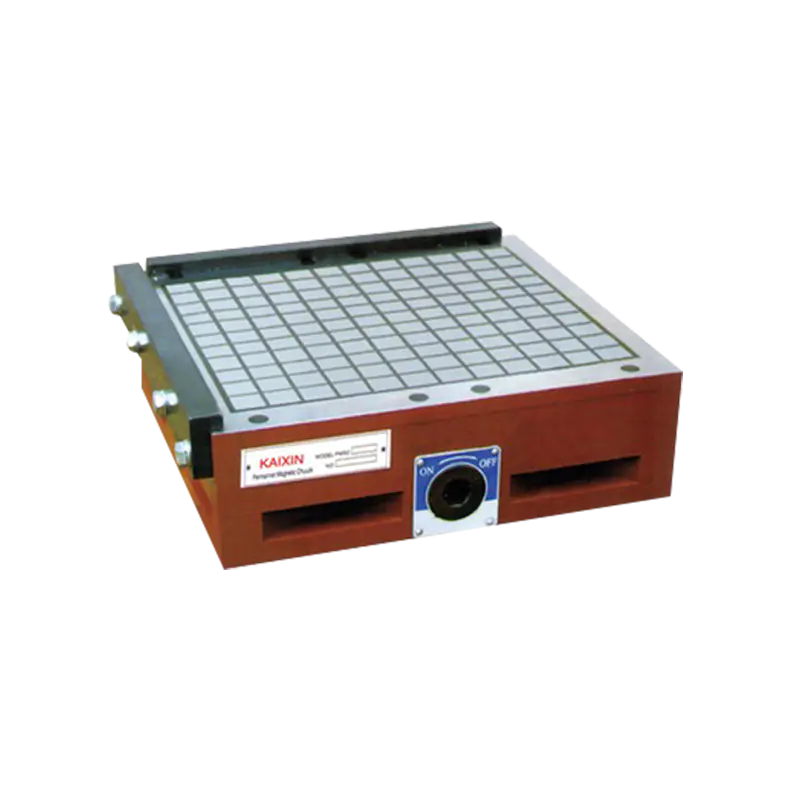
What Is Pole Pitch in a Magnetic Chuck?
Pole pitch is the center-to-center distance between neighboring magnetic poles. Magnetic chucks generally use alternating north and south poles to create a magnetic circuit through the workpiece.
When a ferromagnetic part sits on the chuck, magnetic flux passes through the material and connects adjacent poles. The pole spacing influences this path and the way magnetic attraction is distributed across the contact surface.
Magnetic chuck designs commonly fall into three broad categories:
These descriptions are not universal size specifications. Pole dimensions and recommended workpiece thickness vary between manufacturers, so buyers should check the actual drawings and technical data.
The Relationship Between Pole Pitch and Holding Force
Pole spacing affects magnetic coupling, but a wider pole pitch does not automatically mean greater holding force. The workpiece must provide a suitable path for magnetic flux between adjacent poles.
Fine-pitch designs can be useful for small or thin parts because the shorter spacing makes it easier for limited material thickness to bridge neighboring poles. With wider spacing, a thin workpiece may not provide an effective magnetic return path, reducing the available attraction.
Several other factors influence holding performance:
A workpiece made from a weakly magnetic material may also hold poorly, regardless of pole pitch. The chuck and material need to be considered together.
Why Fine Pole Pitch Is Often Used for Thin Parts
Thin components can be difficult to secure because their limited thickness may not support an effective magnetic circuit across widely spaced poles. Fine pole pitch helps address this issue by placing adjacent poles closer together.
This arrangement can improve magnetic coupling for thin ferromagnetic workpieces and provide more suitable support across smaller contact areas. It may also help reduce uneven attraction when holding small parts.
There is another consideration in precision grinding: thin plates can deform under magnetic force. Even when the chuck holds the material securely, excessive or uneven attraction may affect its shape during machining. Fine pole pitch does not eliminate this risk. Workpiece thickness, residual stress and support conditions still need to be checked.
For very small components, buyers should also confirm the manufacturer's minimum recommended workpiece dimensions. A fine-pitch chuck is not automatically suitable for every small part.
Effects on Grinding Accuracy and Surface Finish
Poor workpiece contact can lead to movement or vibration during grinding. Uneven magnetic attraction may also introduce stress into a thin component, affecting the dimensions measured after the part is released.
Pole pitch is therefore one part of the accuracy equation, rather than a direct guarantee of better grinding results.
Before selecting a chuck, consider the workpiece thickness, material, required flatness and parallelism, as well as the grinding forces involved. Operators should also account for wheel condition, cutting parameters and demagnetization after machining.
A chuck that holds a thick steel block effectively may not produce the same result with a thin precision plate. Testing with a representative workpiece is often the most useful way to confirm suitability.
Comparing Pole Pitch Configurations
| Pole pitch | Typical application | Main consideration |
|---|---|---|
| Fine | Thin plates and small precision parts | Shorter pole spacing can improve magnetic coupling through limited material thickness |
| Standard | Medium-sized grinding components | General-purpose balance of pole spacing and workpiece coverage |
| Coarse | Larger, thicker ferromagnetic parts | Requires sufficient material thickness and contact area |
The table is a general guide, not a substitute for manufacturer specifications. Buyers should request the recommended minimum workpiece thickness and applicable holding-force data before making a selection.
What to Check When Buying a Permanent Chuck
Pole pitch is only one part of the chuck's design. The following details also affect its performance in a grinding machine.
Keep the Chuck Surface Clean and in Good Condition
Grinding debris and small metal chips can collect on the chuck surface. Even a thin layer of contamination may prevent a workpiece from sitting flat, leaving an air gap between the part and the magnetic poles.
Clean the surface before loading each workpiece. Check for raised burrs, scratches and dents, and follow the manufacturer's instructions for magnetization, release and demagnetization. Holding force should never be treated as a guarantee against movement under every grinding condition.
Choose Pole Pitch Around the Workpiece
Fine pole pitch is commonly used for thinner parts, while standard and coarse arrangements may be more appropriate for thicker components. The final choice should account for material properties, dimensions and the required grinding tolerances.
For buyers sourcing a Permanent Chuck, manufacturer data and testing with representative workpieces provide a sounder basis for selection than pole-pitch labels alone. The chuck needs to match the actual parts being ground, not just the general category of machine or application.



PRODUCTS

CONTACT US
Copyright @Zhejiang Three-gold Magnetic Machine Co., Ltd. All rights reserved
Magnetic Lifting Tools Manufacturers


 English
 中文简体
 русский
 عربى