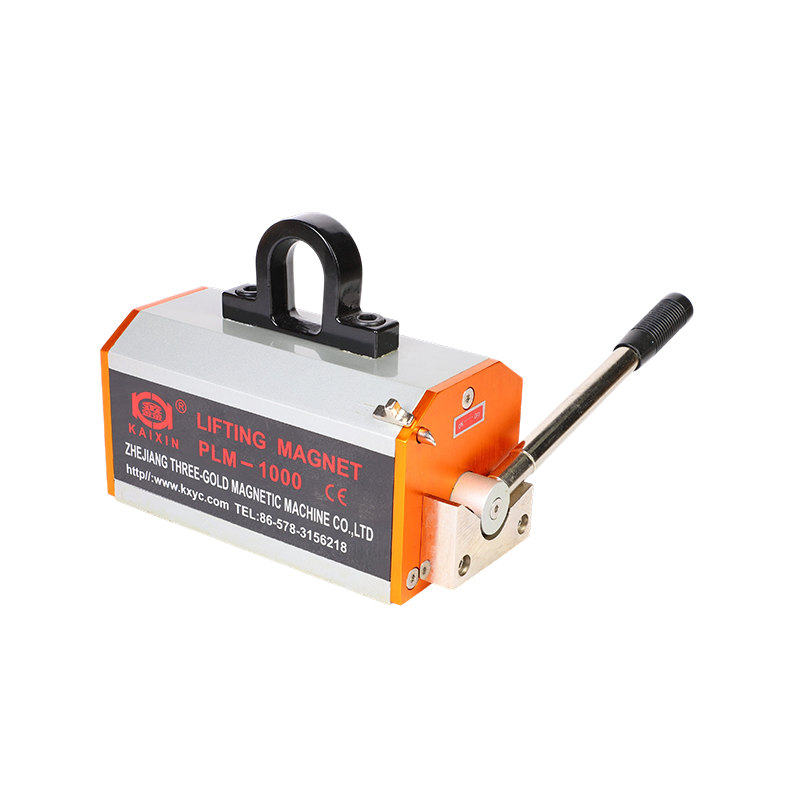
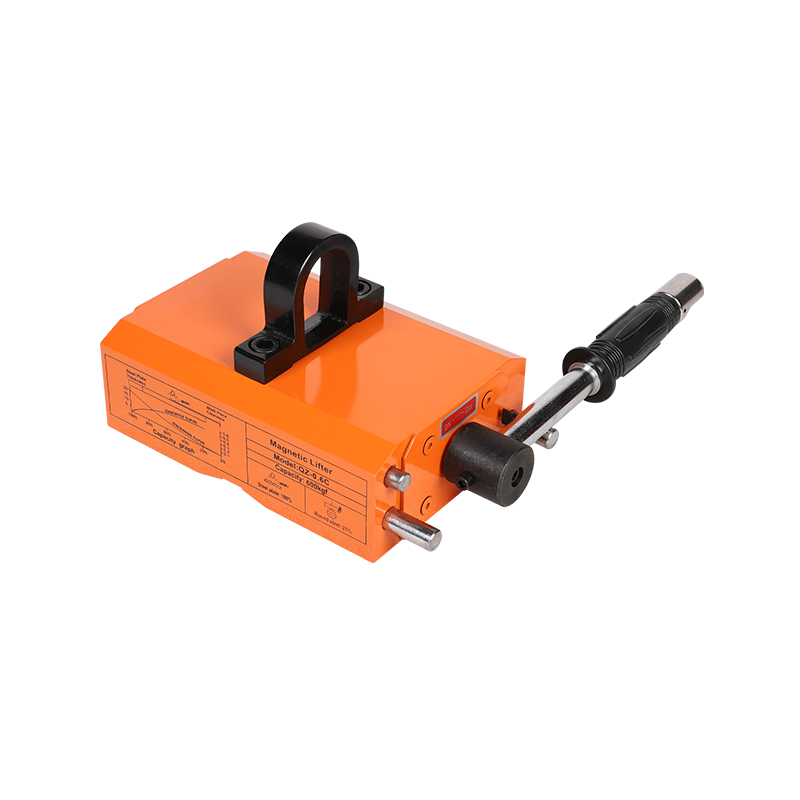
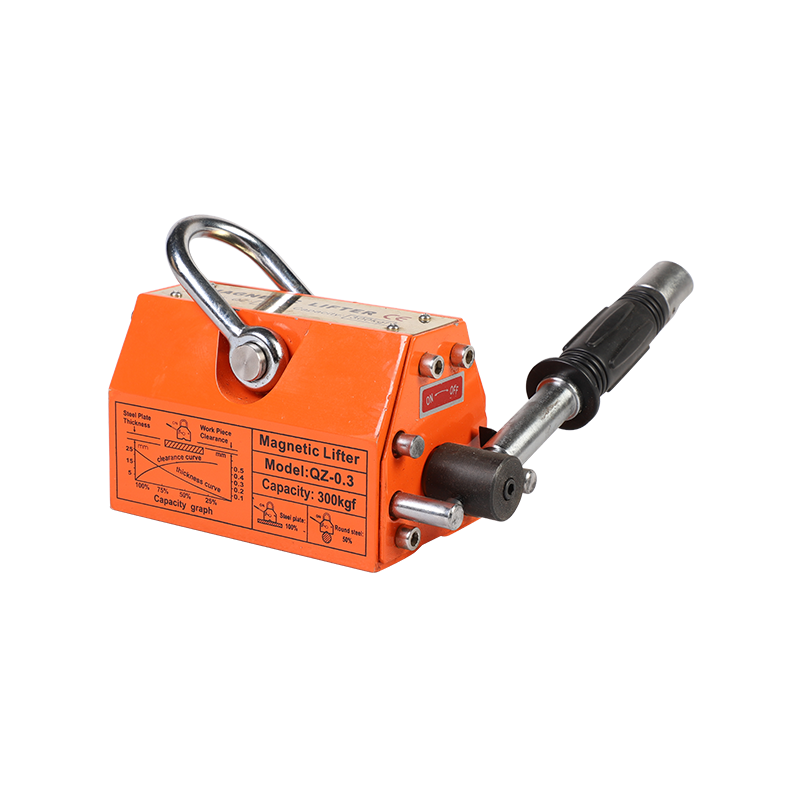
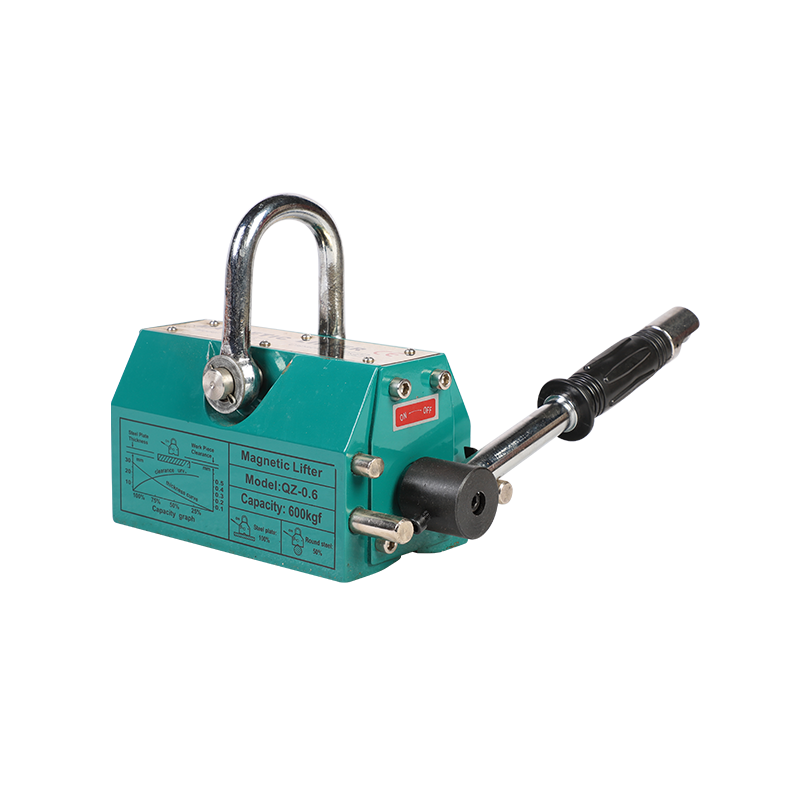
Permanent lifting magnets are commonly used to move steel plates, blocks, pipes, sheets, and other ferromagnetic materials in factories, warehouses, fabrication shops, and construction-related workplaces. For suitable loads, they can make handling easier and reduce the need for slings, hooks, or other lifting accessories.
The tricky part is that the capacity printed on a magnet does not tell the whole story. A magnet rated to lift a certain weight under test conditions may behave differently when used on thin steel, a curved surface, painted material, or a rough and dirty workpiece.
Steel thickness, surface condition, contact area, load shape, air gaps, lifting direction, and the position of the load all matter.
For manufacturers, distributors, lifting-equipment suppliers, and industrial buyers, these details should be considered before selecting a Permanent Lifting Magnet. The manufacturer's rated working conditions and operating instructions should always be part of the selection process.
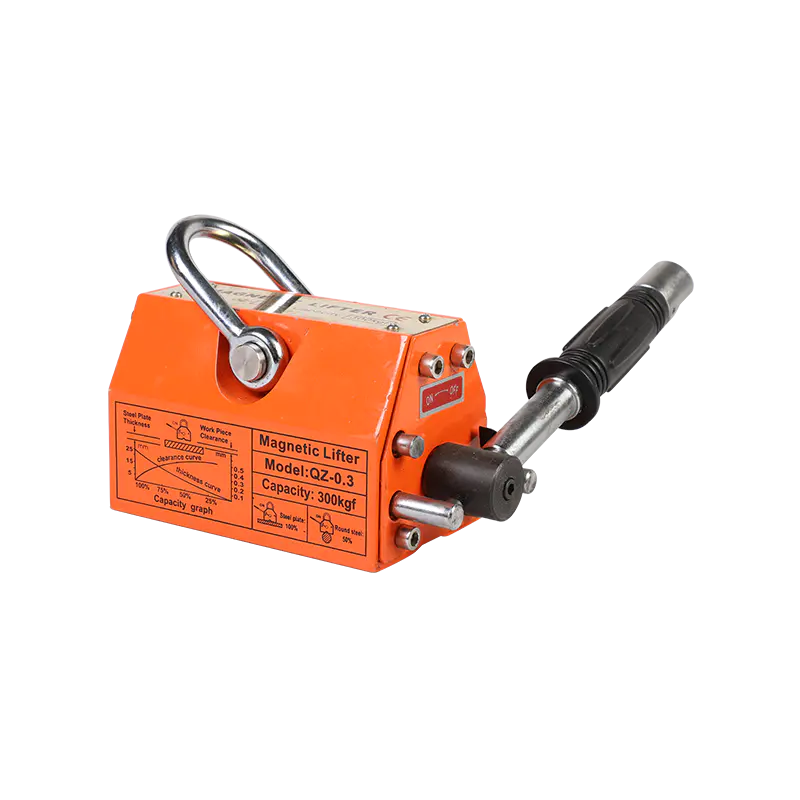
What Does Permanent Lifting Magnet Capacity Mean?
The capacity of a lifting magnet is the load it is designed and rated to handle under specific conditions.
A permanent lifting magnet uses permanent magnetic material to create its magnetic field, so it does not need continuous electrical power to maintain the magnetic force. Once it is correctly positioned on a suitable steel surface, the magnetic circuit passes through the workpiece and creates the holding force used for lifting.
That rating, however, should not be treated as a universal number.
For instance, a magnet may achieve its stated capacity when lifting a thick, clean, flat steel plate. Put the same magnet on a thin sheet with paint or scale between the magnet and the steel, and the available holding force may be quite different.
So, when comparing magnets, the capacity figure needs to be looked at together with the conditions under which that figure applies.
Why Magnet Capacity Is Closely Linked to Load Geometry
The shape and thickness of the steel affect how magnetic force travels through the workpiece.
A thick, flat plate usually provides a good magnetic path. A thin sheet has less material for the magnetic circuit, while a curved or irregular surface may leave part of the magnet face without close contact.
That difference can be easy to overlook when the only number being compared is the advertised lifting capacity.
| Load condition |
Possible effect on lifting capacity |
| Thick, flat steel |
Strong magnetic coupling |
| Thin sheet steel |
Reduced magnetic attraction |
| Curved surface |
Smaller contact area |
| Uneven workpiece |
Air gaps may occur |
| Rust or scale |
Can reduce effective contact |
| Painted surface |
Adds separation between magnet and steel |
| Clean, smooth surface |
Better magnetic contact |
The manufacturer's load chart or technical data should be checked against the actual material being lifted.
Steel Thickness Can Make a Major Difference
Steel thickness is one of the key factors in magnetic lifting.
The workpiece forms part of the magnetic circuit. If the material is too thin, the magnetic flux may not behave in the same way as it does through a thicker section. As a result, a magnet rated for several hundred kilograms or even several tons may not have that same practical capacity on thin sheet steel.
Manufacturers may provide minimum material thicknesses, capacity curves, or other technical information showing how lifting force changes with steel thickness.
For B2B buyers, this information is much more useful than simply looking at the largest capacity printed in a product catalog. If thin sheet is part of the application, the minimum recommended thickness should be confirmed before purchasing.
Air Gaps Can Reduce Magnetic Holding Force
A magnet needs close contact with the steel surface to transfer magnetic force effectively.
Even a small air gap can change the magnetic circuit. In real workshops, these gaps can come from things that seem fairly minor:
- Rust
- Paint
- Scale
- Dirt
- Surface roughness
- Welding residue
- Debris
- Curved surfaces
- Uneven material
The effect will depend on the magnet design and the size of the gap, but it should not simply be ignored.
Before lifting, the contact area should be checked and cleaned when necessary. It is a simple step, but it can make a real difference to the conditions under which the magnet is working.
Surface Condition Matters During Real-World Lifting
Steel in an actual factory or storage yard rarely looks like the clean sample used for a controlled test.
There may be mill scale, oxidation, paint, grease, dust, or other contamination on the surface. A magnet might still attach to the material, but that does not automatically mean it is operating at its rated capacity.
The type and thickness of the surface layer, along with the magnet design, will affect the result.
A practical approach is to inspect the contact area before lifting and remove loose material that prevents the magnet from sitting properly against the steel.
A Permanent Lifting Magnet should always be used according to its specified conditions. Surface contamination should not be treated as if it has no effect on lifting performance.
The Shape of the Load Can Affect Stability
Lifting capacity and load stability are related, but they are two different things.
A magnet may have enough holding force for a particular steel component, yet the load can still tilt, rotate, or swing once it leaves the ground. Long plates, narrow strips, and loads with an offset center of gravity can be especially awkward.
Operators should look at several points before lifting:
- Load center of gravity
- Magnet position
- Contact area
- Load orientation
- Lifting angle
- Potential swinging or rotation
This is particularly relevant when a load is long or unevenly shaped. The magnet may hold the steel, but holding it does not automatically mean the load will remain in a convenient position during movement.
Working Direction Can Influence the Practical Load
A magnetic lifter's rated capacity normally relates to a specific direction of force.
A straight vertical lift is different from pulling or lifting a load sideways. When the load is handled horizontally or at an angle, the force acting on the magnet can change, and sliding may become a concern.
This is why buyers should check whether the published rating applies to vertical lifting, horizontal handling, or another defined arrangement.
The manufacturer's documentation should be used as the reference for determining the permissible load and operating direction.
Rated Working Load Should Be Distinguished From Test Load
Lifting equipment documentation may contain terms such as rated capacity, working load limit, test load, breaking strength, and safety factor. These terms describe different things and should not be treated as interchangeable.
The rated working load is the figure intended for normal operation under the stated conditions. A test load, on the other hand, may be used to verify product performance during testing. It is not automatically an allowable operating load.
Procurement teams should therefore check that the technical documents clearly identify the working load limit or rated lifting capacity.
If the terminology in a catalog or certificate is unclear, it is worth asking the manufacturer for written clarification before the magnet is put into service.
How Safety Factors Relate to Magnet Selection
Lifting equipment is designed with safety considerations that account for differences between controlled testing and actual working conditions.
Still, a safety factor is not permission to exceed the published working load.
There is also a practical issue here. If a magnet is selected right at the edge of the expected load range, small changes in steel thickness, surface condition, or load geometry may leave very little operating margin.
For this reason, the complete application should be reviewed when selecting capacity. The exact safety requirements, workplace procedures, and applicable equipment standards should also be followed together with the manufacturer's instructions.
Capacity Selection for Different Steel Loads
Different steel products create different magnetic lifting conditions.
Steel Plates and Sheets
Flat plates are common applications, but thickness, surface condition, dimensions, and total weight still need to be checked.
Thin sheets deserve extra attention because insufficient thickness may prevent the magnet from reaching the same holding force shown in its rated specifications.
Steel Blocks
Solid steel blocks often provide a substantial amount of material beneath the magnet, which can create favorable magnetic conditions.
Here, the total weight, contact area, and lifting-point position are important considerations.
Steel Pipes
Pipes have curved surfaces, so the actual contact between the magnet and the workpiece depends partly on the pipe diameter and the magnet's design.
A model intended for flat steel should not automatically be assumed to have the same performance on a pipe.
Structural Steel
Beams, channels, and other structural sections can have corners, flanges, narrow areas, and different wall thicknesses. These features can affect the magnetic circuit and the available contact area.
For these jobs, checking the manufacturer's application guidance is especially useful.
| Steel load |
Main factors to review |
| Flat plate |
Thickness, cleanliness, weight |
| Thin sheet |
Minimum material thickness |
| Solid block |
Weight and contact area |
| Pipe |
Diameter and contact curvature |
| Beam |
Surface shape and section thickness |
| Fabricated assembly |
Contact area and center of gravity |
One Magnet May Not Be Enough for Long Loads
For long plates, beams, or other extended steel loads, the question is not only how much the load weighs. Controlling the load during lifting matters too.
Multiple magnets may be used to distribute the load and reduce bending or tilting. But simply dividing the total weight by the number of magnets is not enough to determine whether the arrangement is safe. The load may not be shared equally between the magnets.
The spacing, center of gravity, load rigidity, and manufacturer's recommended setup all need to be considered when using more than one lifting point.
Magnet Condition Can Change Over Time
Permanent magnets do not need a continuous electrical supply, but they still need inspection and maintenance.
Regular use can cause wear to the lifting mechanism, magnetic face, locking parts, handle, and other mechanical components. Possible issues include:
- Damaged magnetic contact surfaces
- Worn locking mechanisms
- Corrosion
- Loose components
- Mechanical damage
- Contaminated contact faces
A magnet may appear to work during a quick unloaded check and still have a problem that becomes significant under load.
For equipment used regularly, inspection should form part of the normal lifting procedure.
Magnetic Face Condition Is Particularly Important
The magnetic face is the part that needs to sit closely against the steel.
Deep scratches, dents, rust deposits, or dirt can interfere with that contact. The face should therefore be kept clean and checked at suitable intervals.
If a magnet has been dropped, struck heavily, or begins to show unusual lifting behavior, it should be taken out of service until it has been inspected according to the manufacturer's procedure.
What Should B2B Buyers Ask a Permanent Lifting Magnet Manufacturer?
Before placing an order, buyers should ask for technical information that matches the actual lifting application.
Useful questions include:
- What is the rated lifting capacity?
- At what steel thickness is that capacity achieved?
- Is a load-capacity chart available?
- What is the minimum recommended material thickness?
- How does surface condition affect capacity?
- What types of steel are supported?
- Can the magnet be used on curved surfaces?
- What lifting direction does the rating cover?
- What inspection procedures are recommended?
- Are test certificates or relevant documents available?
- What spare or replacement components are available?
Having these details makes model-to-model comparison much more meaningful.
Quality Control and Testing Matter for Lifting Magnets
Because magnetic lifters are used for lifting, manufacturing quality and testing deserve close attention.
A factory may check areas such as:
| Testing or inspection area |
Purpose |
| Magnetic holding force |
Verifies magnetic performance |
| Dimensions |
Confirms product geometry |
| Mechanical components |
Checks structural integrity |
| Locking mechanism |
Confirms proper engagement |
| Surface condition |
Ensures correct contact area |
| Load testing |
Verifies performance under defined conditions |
| Functional inspection |
Confirms normal operation |
The exact testing procedure should be based on the product design and applicable requirements.
For B2B purchasers, asking how the manufacturer tests and documents its products can provide useful information about production quality and traceability.
Customization Can Be Useful for Specialized Handling
Standard permanent lifting magnets cover many common steel-handling jobs, but some applications have less typical requirements.
Depending on the project, customization may involve:
- Rated capacity
- Magnet dimensions
- Handle arrangement
- Contact surface
- Lifting eye
- Mounting structure
- Magnetic circuit
- Packaging and labeling
A manufacturer handling narrow steel components, for example, may need a smaller magnet with a particular contact shape.
For custom designs, real material samples and actual operating conditions should be considered during development. Testing the proposed design before regular production use is also advisable.
A Practical Capacity Checklist for Buyers
Before choosing a Permanent Lifting Magnet, buyers should review the following points:
| Checkpoint |
What to confirm |
| Load weight |
Actual and maximum expected weight |
| Steel thickness |
Meets the magnet's specified range |
| Surface condition |
Rust, paint, scale, dirt, or other gaps |
| Load shape |
Flat, curved, irregular, or narrow |
| Center of gravity |
Allows stable positioning |
| Lifting direction |
Matches the rated application |
| Duty cycle |
Frequency of lifting operations |
| Magnet capacity |
Suitable for the full operating condition |
| Inspection |
Maintenance and testing requirements |
Looking at these points gives buyers a much clearer picture than comparing capacity figures alone.
Choosing Capacity Around the Real Lifting Application
The capacity of a Permanent Lifting Magnet is certainly an important specification, but it does not stand on its own.
Steel thickness, surface condition, contact area, load shape, lifting direction, center of gravity, and the condition of the magnet can all affect actual lifting performance. The published rating needs to be understood in relation to the manufacturer's test conditions and working limits.
For manufacturers, wholesalers, and industrial buyers, the selection process should start with the real load. Steel dimensions, weight, thickness, surface condition, and lifting method give a supplier much more useful information than a target capacity alone.
Regular inspection, proper maintenance, operator training, and compliance with applicable lifting procedures also remain part of safe operation.
When a magnet is matched to the actual load and operated within its documented limits, it can provide a practical way to handle steel materials and reduce manual handling work across many industrial environments.






 English
 中文简体
中文简体
 русский
 عربى
عربى