A machinist bolts a steel block onto a mill, tightening four separate clamps around its edges just to keep it from shifting during a cut, only to realize halfway through that one of those clamps is sitting exactly where the tool needs to pass. Now it's unbolt, reposition, re-tighten, recheck alignment — five minutes lost to a problem that shouldn't have existed in the first place. An Electro-Permanent Magnetic Chuck sidesteps that whole headache by holding the workpiece from underneath through magnetic force, leaving the top and sides completely open for the tool to move freely. Mechanical clamps have worked for a long time and still do plenty of jobs well. But they eat up time in setup, they block access to certain edges, and repositioning them mid-job interrupts a workflow that would otherwise keep moving. That's really the gap magnetic workholding steps into.
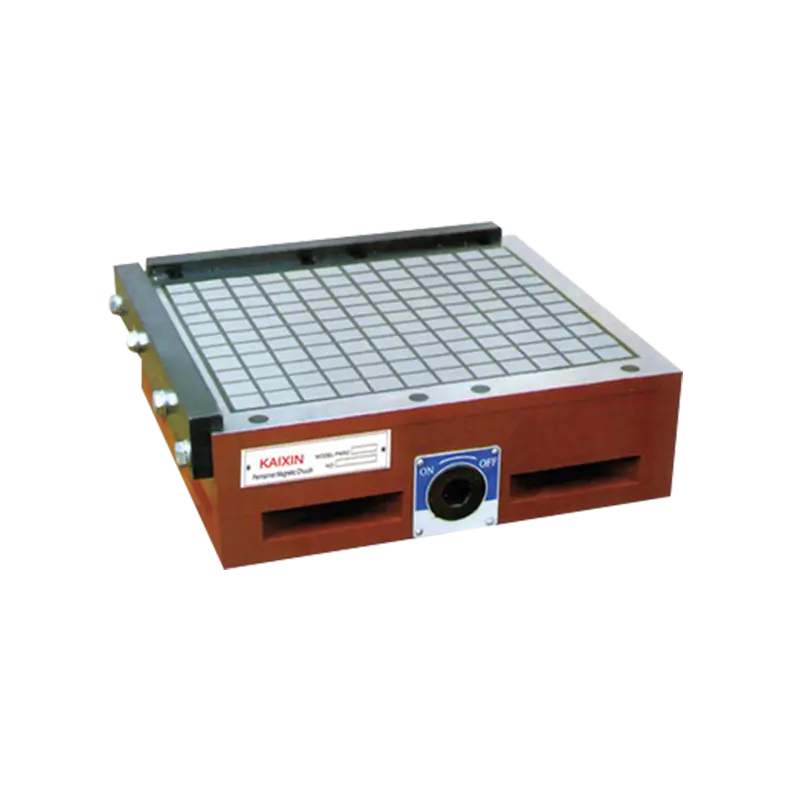
This kind of chuck holds magnetic materials in place using magnetic force instead of physical pressure squeezing the workpiece from the sides.
The whole point is creating a solid connection between the chuck and the material while leaving the rest of the workpiece's surface open and unobstructed.
A typical setup includes:
| Component | What It Does |
|---|---|
| Magnetic surface | Generates the holding force against the material |
| Control system | Switches the magnetic hold on and off |
| Supporting structure | Keeps everything steady during the actual machining |
| Contact area | The physical point where chuck meets workpiece |
This setup gives manufacturers a genuinely different way to approach certain machining jobs compared to bolting everything down with traditional clamps.
A workpiece that shifts even slightly during cutting or grinding throws off the whole result — measurements come out wrong, surfaces end up uneven, and sometimes the piece just gets ruined outright.
Poor workholding tends to create problems like:
A dependable holding method keeps the whole production process running smoother, without constant interruptions to readjust something that should've stayed put.
Manufacturers are usually chasing a balance between three things — stability, convenience, and flexibility — and the right workholding method really depends on the material, the specific machining job, and the environment it's happening in.
The core function here is holding suitable metal workpieces firmly in place through magnetic force alone, no bolts or clamps digging into the edges.
That magnetic connection does the same job clamps would normally do, minus the physical hardware crowding around the material.
| Benefit | What It Means on the Shop Floor |
|---|---|
| Stable positioning | Keeps results consistent from piece to piece |
| Open access | Lets tools reach nearly the entire workpiece surface |
| Less clamp interference | Frees up more actual working room |
| Flexible setup | Handles odd shapes that clamps would struggle with |
Since the holding method doesn't rely on grabbing multiple edges physically, operators end up with a lot more room to plan out how a machining job actually gets approached.
A lot of manufacturing efficiency comes down to small, unglamorous steps — how long setup takes, how easy positioning is, how much of the workpiece is actually reachable.
An Electro-Permanent Magnetic Chuck tends to smooth out several of those steps at once.
Skipping the process of arranging and tightening multiple clamps saves real time before machining even starts.
With fewer physical obstructions sitting around the workpiece, tools can reach areas that clamps would normally be blocking.
Odd-shaped or irregular workpieces that would be a hassle to clamp traditionally often sit just fine under magnetic hold.
Cutting out repeated repositioning keeps a job moving without constant pauses to readjust hardware.
How much of a difference this actually makes depends on the specific job, the equipment involved, and the conditions on that particular shop floor.
Magnetic chucks are built specifically for materials that respond to magnetic force — this isn't something that works universally across every material a shop might handle.
Common materials that fit this category:
| Material | Typical Use |
|---|---|
| Steel | Standard machining and processing work |
| Iron-based parts | Various industrial production tasks |
| Other magnetic metals | A range of manufacturing applications |
Non-magnetic materials — aluminum, plastic, most non-ferrous metals — simply won't hold under this kind of chuck, so a different workholding method has to step in for those jobs.
Before committing to a magnetic chuck setup, it's worth confirming the actual material being processed will respond to magnetic force in the first place.
Workholding choices really come down to what a specific production line actually needs day to day.
An Electro-Permanent Magnetic Chuck often gets chosen because it offers a genuinely different way of handling metal workpieces compared to bolting everything down manually.
Common reasons it gets picked:
For a lot of manufacturers, the goal isn't just holding something in place — it's finding a holding method that actually fits smoothly into the rest of the machining process, instead of fighting against it.
Magnetic workholding turns up wherever metal processing is a regular part of the job.
Shops working with metal components often lean on magnetic holding during cutting and shaping work, especially where clamp access would otherwise be a problem.
Equipment builders need workholding that stays reliable and precise while producing accurate parts, run after run.
Magnetic chucks help secure metal parts that need to stay perfectly still during precision work.
Plenty of industrial operations benefit from a workholding method flexible enough to handle varying shapes and sizes without constant reconfiguration.
What actually makes sense depends heavily on the specific process and the material a given shop is working with day to day.
Picking a workholding system takes some real thought about what a shop's actually trying to accomplish.
A few things worth considering:
| Consideration | Why It Matters |
|---|---|
| What material's being processed | Determines if it'll even work magnetically |
| The specific machining process | Shapes what kind of holding is actually needed |
| The production environment | Affects whether this setup fits the space |
| Ongoing maintenance needs | Impacts how well it holds up over time |
| Overall workflow goals | Helps confirm it actually fits the bigger picture |
A workholding solution needs to fit into the whole manufacturing process, not just solve one isolated step in isolation.
Picking equipment without really thinking through the actual application tends to leave a lot of the potential benefit on the table.
Like most manufacturing equipment, a magnetic chuck needs regular upkeep to keep working the way it's supposed to.
A few habits worth keeping up:
Dust, metal shavings, and general debris can quietly weaken the connection between the chuck and the workpiece over time if left unaddressed.
Staying on top of maintenance keeps that connection reliable, which really is what the whole system depends on to function properly.
Manufacturing keeps leaning toward processes that flex more easily and run with fewer interruptions, and workholding is a quiet but real part of that shift. An Electro-Permanent Magnetic Chuck gives manufacturers another option for securing suitable metal workpieces, one that trades physical clamps for magnetic force and opens up access in the process. By offering flexible positioning, better surface access, and a genuinely different approach to holding materials in place, it fits into a lot of the changing needs across different machining environments. Workholding keeps evolving as manufacturers look for practical ways to smooth out daily operations and adapt to whatever new production challenges show up next.



PRODUCTS

CONTACT US
Copyright @Zhejiang Three-gold Magnetic Machine Co., Ltd. All rights reserved
Magnetic Lifting Tools Manufacturers


 English
 中文简体
中文简体
 русский
 عربى
عربى